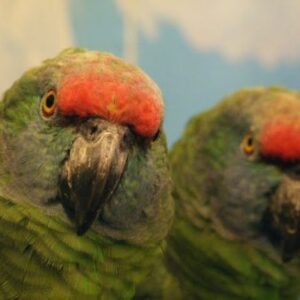
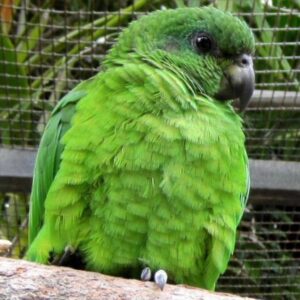
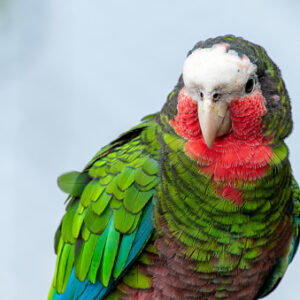
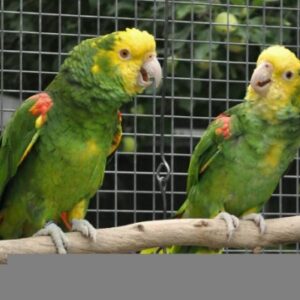
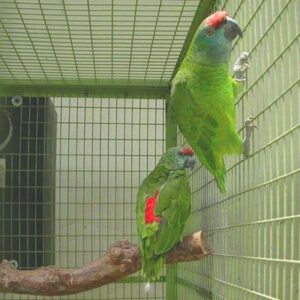
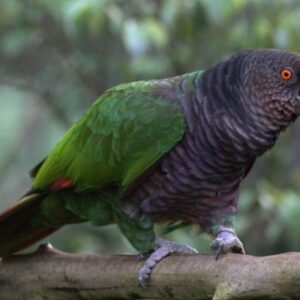
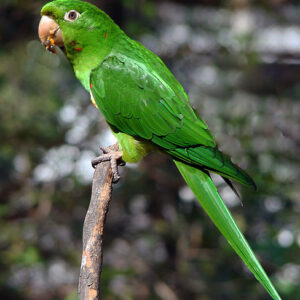
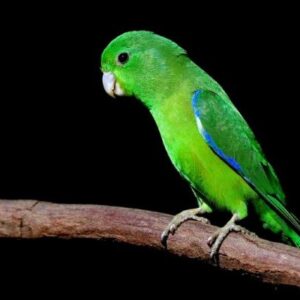
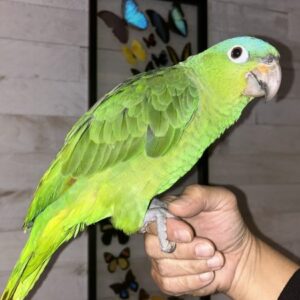
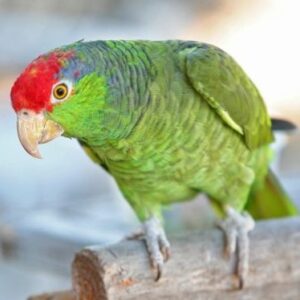
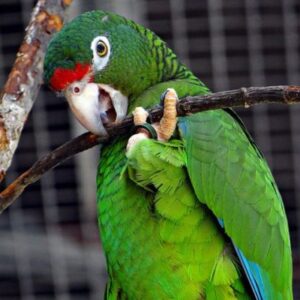
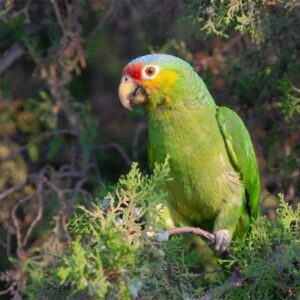
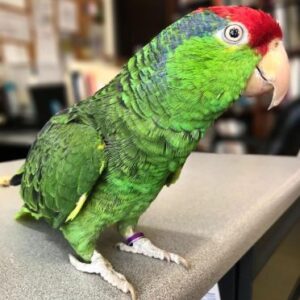
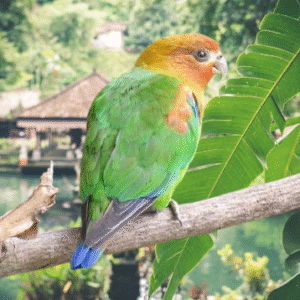
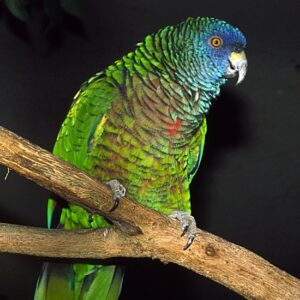
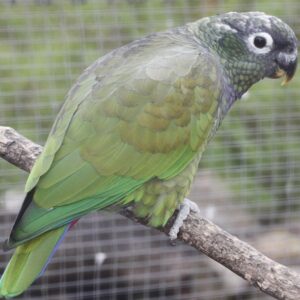
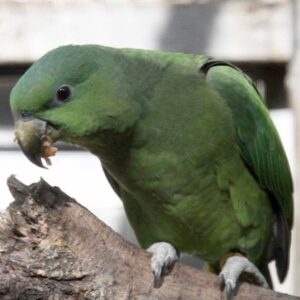
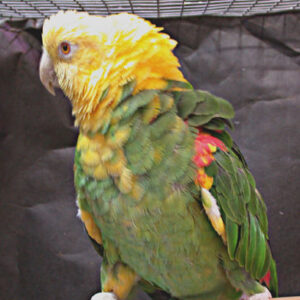
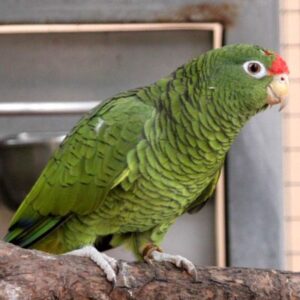
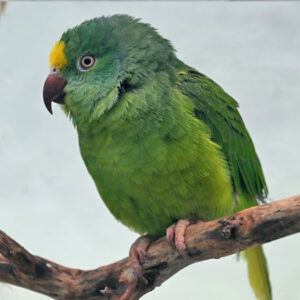
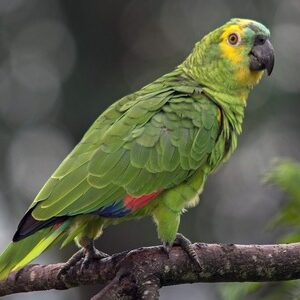
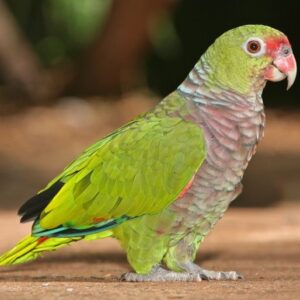
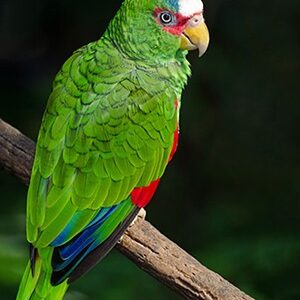
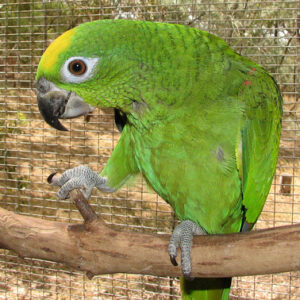
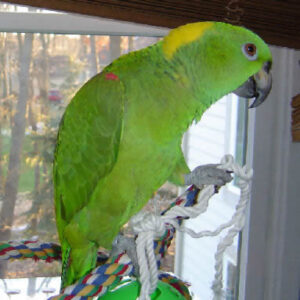
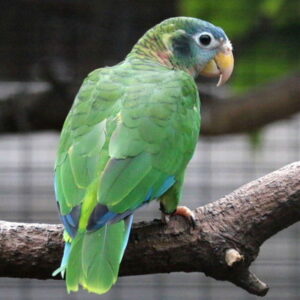
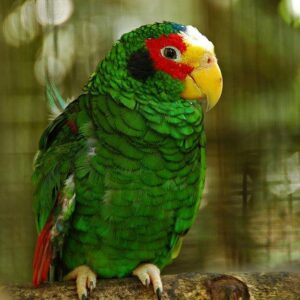
Amazon parrots (genus Amazona) are a fascinating group of 30–35 species of medium‑ to large, short‑tailed parrots native to South America, Mexico, and the Caribbean.
Key Characteristics:
🦜 Overview
Appearance: Mostly green plumage often accented with vivid yellows, reds, or blues on their head, shoulders, and wings. They have chunky bodies and short squared tails.
Size: Typically 25–40 cm (10–16 in) in length; weight varies from about 200 g to 550 g depending on species.
Diet: In the wild, they primarily eat seeds, nuts, fruits, berries, blossoms, and leafy matter.
🧠 Intelligence
Intelligence & Vocal Skills Amazon parrots are gifted mimics—many species can learn complex speech and songs, with excellent clarity and pronunciation. Particularly chatty species include Yellow‑Naped, Blue‑Fronted, and Yellow‑Headed Amazons.
Lifespan These parrots are long‑lived, ranging from 25 to 60 years on average in captivity. Some can even reach 80 years.
Personality Known for their outgoing, playful, and sometimes “macho” demeanor—males may strut, spread tail feathers, or pin their eyes when excited. They’re social, affectionate, and need regular interaction.
🦜 Popular Species
Species
Highlights
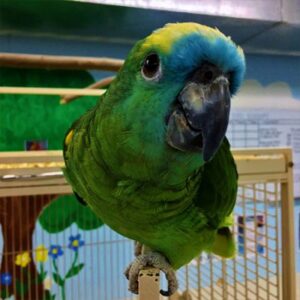
Blue‑Fronted Amazon (A. aestiva)
Sizes ~38 cm; blue on forehead, yellow face; common pet with talking ability. Lives ~40–60 years.
Yellow‑Naped Amazon (A. auropalliata)
Green with yellow nape. Excellent speakers, live ~20–90 years.
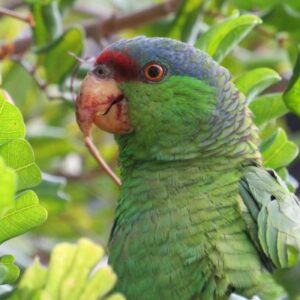
Vibrant red lores, playful, lives up to ~80 years in captivity.
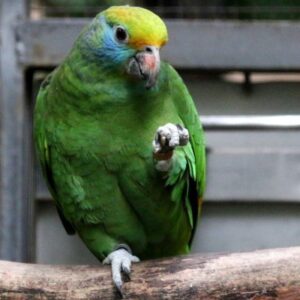
Hispaniolan Amazon (A. ventralis)
Green with white forehead, red and blue details; medium‑sized.
❤️ Should You Own One?
Pros:
Remarkably intelligent and affectionate.
Long-term companion with singing and speech.
Cons:
Very long life – a serious commitment.
Loud and demanding.
Need significant space, time, and enrichment.
Not ideal for first-time bird owners or small living situations.
🏡 Care Requirements (Pet Context)
Housing: Spacious cage/play area (min. ~60×90×120 cm) with sturdy perches, climbing toys, swings.
Diet: High-quality pelleted diet, supplemented with fresh veggies, fruits, seeds, nuts, blossoms, and safe human-grade foods. Limit treats.
Enrichment: Mental stimulation is essential—provide puzzles, social interaction, training sessions.
Exercise: Daily out-of-cage time to fly, climb, and play. Monitor for signs of aggression during hormonal phases.
Socialization: They thrive on interaction—bond with owners but can be noisy (loud squawks). Not ideal for apartments without soundproofing
✅ Conservation & Wild Populations
Threats: Habitat loss, illegal capture for pet trade, deforestation—many species are protected under CITES (e.g., Yellow‑Headed, Yellow‑Naped Amazon). Populations range from “Least Concern” to “Endangered.” Some feral populations exist in urban areas like Florida, Europe, and South Africa .
Feral Birds: Sightings in places such as Miami, South Africa (e.g., Johannesburg), and cities in Europe due to escape or release
⚠️ Final Thoughts
Amazon parrots are incredible companions for the right owner—rewarding, clever, and full of personality. But they demand a lifetime of specialized care, attention, and an enriched environment. If you’re experienced, ready for a long-term partnership, and can meet their needs, an Amazon can be a truly extraordinary pet. For beginners or limited-living scenarios, smaller or quieter parrot species may be a better fit.
If you want tips about specific species, setting up your space, or local breeders/rescues around Johannesburg, just let me know!